
Start outside
Trace one continuous route from arrival to sleep.
Parking to entry
Confirm the parking surface, slope, distance, curb or drainage channel, snow removal, lighting, and whether another vehicle can block the usable space.
Entry to main living area
Count every step and threshold. Ask about ramp slope, landings, handrails, door weight, lock height, and clear width when the door is open—not the frame's outside measurement.
Living area to bedroom
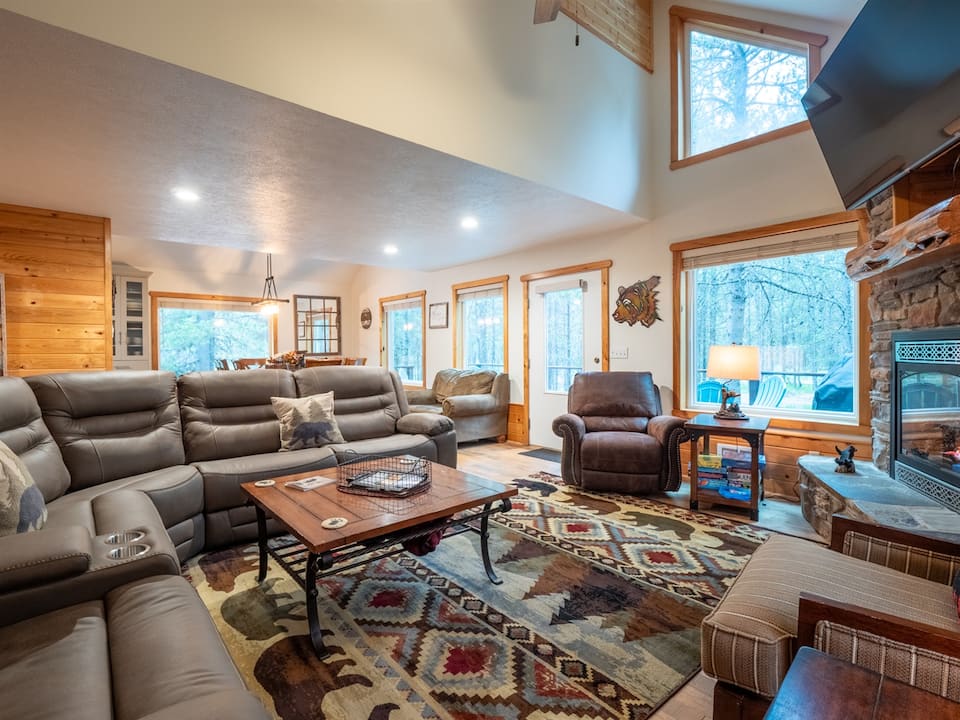
Verify floor transitions, rug edges, furniture clearance, turning space, bed approach, mattress height, and whether the chosen bedroom is genuinely on the same level.
Bedroom to bathroom at night
Check lighting, distance, door swing, hallway width, and whether anyone crosses the kitchen or a sleeping area. A good daytime route may fail when someone is tired and the house is dark.
Emergency exit
Ask which exit remains usable if the main path is blocked, how smoke and CO alarms notify guests, and what happens to lifts, powered beds, well pumps, heat, and electronic locks during an outage.
Ask for evidence
Measurements beat adjectives.
| Listing phrase | What to request |
|---|---|
| Step-free | Current photos from parking through the entry; every threshold height |
| Wide doors | Narrowest clear opening with the door fully open |
| Accessible bathroom | Door width, turning area, toilet approach, transfer side, grab-bar locations, shower entry |
| Walk-in shower | Lip height, floor slope, seat type and height, controls, handheld shower, drainage |
| Main-floor bedroom | Complete path from entry and bathroom; bed height and approach on required sides |
| Flat path | Surface, cross-slope, steepest section, distance, drainage, and seasonal condition |
Photographs should show the whole route, not tightly cropped features. A tape measure visible in the image can resolve uncertainty that a message cannot.
Bathroom reality
Choose around the transfer that matters most.
- Which side of the toilet is open, and does the door block that space?
- Are grab bars fixed and positioned for the traveler, or is the listing referring to a towel bar?
- Is the shower truly roll-in, or does “walk-in” still include a curb?
- Can the shower seat support the user, and is it fixed, fold-down, or loose furniture?
- Can controls and towels be reached before entering the wet area?
- Is there enough room for a helper when one is part of the plan?
- Does hot water last through the group's actual bathing schedule?
Beyond the doorway
A usable trip also needs seating, food, rest, and a bad-weather day.
Supportive seating
Count chairs with suitable height, arms, and firmness—not only sofa capacity.
Kitchen reach
Identify one usable work surface, appliance controls, refrigerator access, and dining position.
Sensory details
Ask about lighting, glare, alarm types, captioned television, quiet rooms, scents, and predictable temperature.
Service and support
Record host response time, nearest urgent services, delivery limits, and the address format emergency responders use.
The park is a second accessibility plan
Do not let an accessible cabin hide an unusable itinerary.
NPS says each park website has its own accessibility section because features and services vary by park. Review parking, shuttles, trails, restrooms, viewpoints, borrowed equipment, and seasonal closures separately. Ask the park directly when the website does not answer a critical route question.
Eligible US citizens and permanent residents with a permanent disability may qualify for the free federal Access Pass. Service animals are governed differently from pets; review the specific park and lodging policies rather than applying a pet rule by assumption.
Ready-to-send host message
Describe the need without asking the host to diagnose it.
Save the response with the reservation. Reconfirm before the free-cancellation deadline and again after any ownership, renovation, or room-assignment change.
Source note
Accessibility guidance reviewed August 29, 2026.
This page is a practical verification framework, not a legal accessibility determination. The emphasis on specific feature descriptions reflects US Department of Justice lodging-reservation guidance; park-planning details reflect NPS accessibility information.